California Safety, Health, and Employment Compliance Guide
California Safety, Health, and Employment Compliance Guide Overview This episode provides a comprehensive examination of California's workplace safety regulatory environment, focusing on the notoriously specific and intensely complex requirements that...
Get unlimited access
$250
per year
Includes 1.25 credits in this course — plus 88 courses with 121 credit hours total
Course Overview
California Safety, Health, and Employment Compliance Guide
Overview
This episode provides a comprehensive examination of California's workplace safety regulatory environment, focusing on the notoriously specific and intensely complex requirements that carry significant risk for employers. The discussion covers three main pillars: foundational injury record keeping (Forms 300, 300A, 301), new environmental safety frontiers including indoor heat illness rules, and implementing workplace violence prevention under SB 553. The episode emphasizes that Cal/OSHA doesn't just ask employers to be safe but requires them to be master documentarians of their safety systems, with the entire structure functioning on principles of extreme proactivity and meticulously documented compliance.
Learning Objectives
After completing this episode, participants will be able to:
- Apply the seven-day clock requirement for recordable incident determinations and proper form completion
- Differentiate between medical treatment and first aid for accurate Form 300 logging
- Calculate total recordable case rate (TRCR) and DART rate for safety performance benchmarking
- Implement the seven required elements of California's mandatory Injury and Illness Prevention Program
- Design indoor heat illness prevention programs meeting the 82°F trigger requirements
- Develop comprehensive workplace violence prevention plans addressing all four types of violence
- Navigate multi-employer work site responsibility including controlling employer liability
- Manage post-injury return to work processes including modified work offers and fitness-for-duty exams
Key Takeaways
- Administrative intensity: Not enough to be safe, must document system that makes you safe with five-year retention
- Record keeping precision: Seven-day clock from notification, critical medical vs. first aid distinction
- Proactive safety systems: Every employer must have effective written IIPP with seven mandatory elements
- New regulatory frontiers: 82°F trigger for indoor heat, workplace violence prevention for four types
- Multi-employer responsibility: Controlling employer can be cited even without direct employee involvement
- HR central role: 10% exam weight for PHRCA, primary driver for safety program development
- Competent person authority: Must have authorization to take prompt corrective measures immediately
- Privacy protection: Strong privacy protections for sensitive cases in Form 300 logging
- Engineering controls first: Hierarchy of controls requires engineering solutions before administrative controls
- Violent incident logging: Detailed logging required but with strict privacy protections excluding all PII
Course Curriculum
2 lessonsWhat You'll Learn
- Comprehensive coverage of key HR concepts
- Practical applications and real-world scenarios
- Best practices and compliance requirements
Course Completion Award
Certificate of Completion
Downloadable PDF certificate
Categories
Ready to earn your recertification credits?
Get unlimited access to this course — included in the $250/year Annual Pass with 88 courses.
Related courses
Browse all courses →
California Civil Rights Enforcement, Laws, and Workplace Guidance
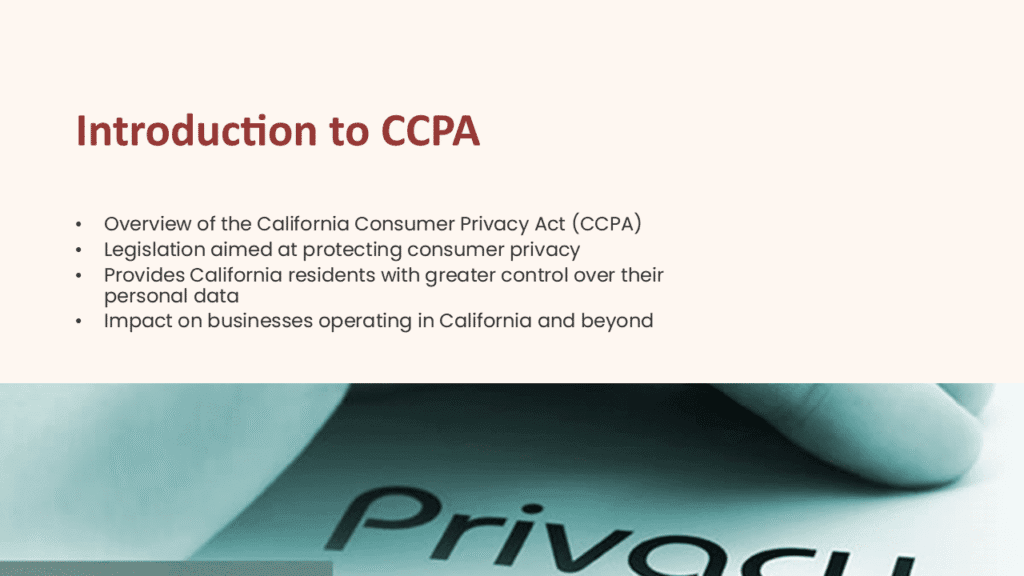
California Consumer Privacy Act

California Employee Rights and Employer Obligations: Disability, Employment, and the Law